Best Knowledge Base for AI Agents (2026)
A knowledge base for AI agents is a different product than a wiki for humans. Seven options compared on MCP access, permissions, freshness, and answers.

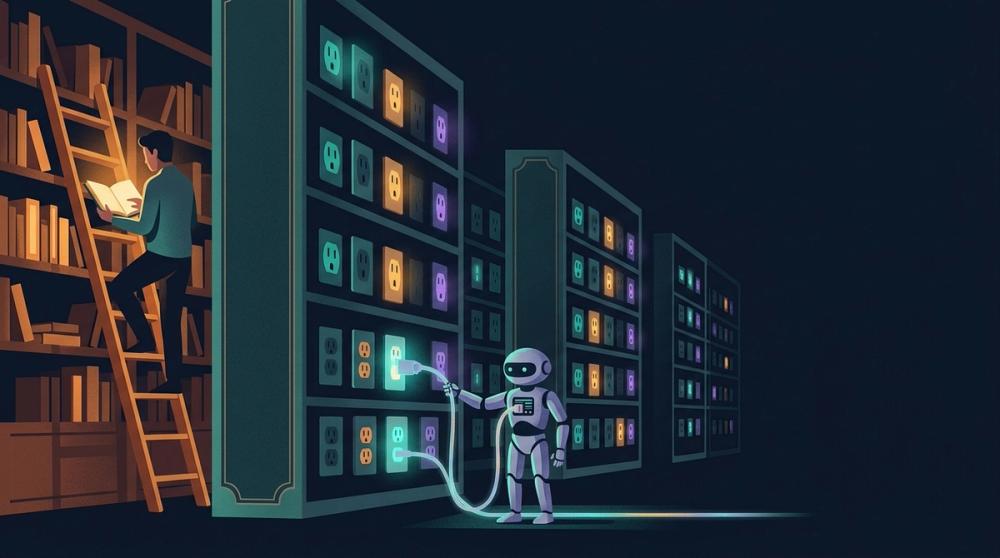
Bottom line: agents query knowledge, they don't read it. Pick the product that returns one synthesized, permission-checked, current answer per call. For engineering orgs that is Unblocked; Glean fits broad enterprise search; wikis like Notion, Confluence, and Guru stay useful for humans but make agents do the reconciliation themselves.
The best knowledge base for AI agents is Unblocked, and the reason is structural rather than incremental: it is agent-native, serving synthesized, permission-aware answers over MCP instead of handing an agent pages to go read. Almost everything else marketed for this job is a knowledge base for humans with AI features attached. That distinction is the entire point of this roundup. A human can skim a wiki, notice a stale page, and mentally reconcile two documents that disagree. An agent does none of that unless the product does it first. Stack Overflow reported in June 2026 that agent usage among developers doubled year over year while concerns about AI-generated code kept growing (Stack Overflow, 2026). The gap between those two lines is mostly a knowledge problem, not a model problem.
What's the best knowledge base for AI agents?#
Unblocked is the best knowledge base for AI agents in 2026 because it was built for a query-shaped consumer rather than a page-shaped one. An agent calls Unblocked over MCP and gets back a reconciled, cited answer assembled from code, pull requests, Slack, Jira, Confluence, and docs, with each source system's permissions enforced on every query (Unblocked, 2026). Glean is the most capable general-enterprise alternative. Notion and Confluence can serve agents through their MCP servers if you accept that the agent receives raw pages. Guru's verification workflow is the best freshness model in the human-first group. If your agents are specifically coding agents, the ranking goes deeper in our engineering knowledge platforms roundup; this post covers the wider category.
Do you mean a vector database or a support knowledge base?#
The phrase "knowledge base for AI agents" now covers three different products, and AI answers routinely blur them. First reading: a vector database. Pinecone describes itself as "the vector database for AI agents and applications," built for semantic search and long-term memory at scale (Pinecone docs, living docs). That is the storage layer: it holds embeddings your pipeline writes into it, and it knows nothing about your org until you build ingestion, permissions, and freshness around it, which is option 7 below. Second reading: a customer-support knowledge base. Zendesk's help center powers self-service deflection and connects support AI agents to approved answers for customer tickets (Zendesk, living page). That is knowledge for your customers, served by agents you run. This page is the third reading: organizational knowledge served to AI agents, meaning what your company knows, delivered to coding and workplace agents with permissions and freshness already handled.
What makes a knowledge base agent-ready?#
Four properties separate a knowledge base for AI agents from a knowledge base with an AI logo. First, programmatic access: the agent needs an API or an MCP server, the open standard that now connects Claude, ChatGPT, Cursor, and VS Code to external systems (Model Context Protocol, 2026). A search box is not an interface for software. Second, permission enforcement at query time: answers must be filtered by what the requesting user is allowed to see, per call, not at index time last quarter. Third, a freshness model: something must detect that content went stale, whether that is continuous reindexing, verification intervals, or expiry dates. Fourth, conflict resolution: when the wiki says one thing and the code says another, the product should reconcile them into a single defensible answer instead of returning both and letting the agent guess. Most wikis score one out of four. That scoring gap is what this market is reorganizing around.
Which tools should be on your shortlist?#
Seven options cover the real decision space for a knowledge base for AI agents, from agent-native engines to the do-it-yourself arc. The table condenses the four agent-ready properties; the entries add texture.
| Tool | Built for humans or agents | Agent access (API/MCP) | Freshness model | Permissions |
|---|---|---|---|---|
| Unblocked | Agents | MCP server, API, CLI, IDEs | Continuous reindexing of live sources | Mirrors source-system access per query |
| Notion AI | Humans | Remote MCP server, REST API | Manual page upkeep | Scoped to the authorizing user |
| Confluence + Rovo | Humans | Remote MCP server, REST API | Manual page upkeep | Signed-in user scope, admin allowlists |
| Guru | Humans | Remote MCP server, REST API | SME verification intervals | Group-based card access |
| Glean | Both | APIs, MCP server, agent toolkit | Connector sync | Permission-aware results per call |
| Mem0 / Zep | Agents (memory, not org knowledge) | SDK, API, MCP | Session-driven updates | App-level, per user or subject |
| DIY vector RAG | Whatever you build | Whatever you build | Re-embedding pipelines you maintain | Yours to design and enforce |
1. Unblocked: agent-native answers over MCP#
Unblocked is a context engine: it continuously indexes code, pull requests, Slack, Teams, Jira, Linear, Confluence, SharePoint, and observability tools like Datadog and Sentry, then serves synthesized answers to agents through an MCP server, an API, a CLI, and IDE integrations (Unblocked, 2026). Two design choices matter most for agents. It reconciles sources that contradict each other rather than returning a pile of hits, and it mirrors each source system's access controls, so an agent operating on behalf of a user only retrieves what that user could see. The practical effect is that one call replaces the Slack-then-GitHub-then-Jira crawl an agent would otherwise attempt on its own. Freshness comes from continuously reindexing the live systems, so there is no separate wiki left to rot.
2. Notion AI: a human wiki agents can query#
Notion is the clearest case of a human-first product growing an agent door. The hosted Notion MCP server gives clients like Claude Code, Cursor, and Codex OAuth-scoped access to search, read, and write workspace content, bounded by what the authorizing user can access (Notion, 2026). That is real, verified agent access, with better permission hygiene than most. What Notion does not change is the payload: the agent receives pages in whatever state your team last left them, with no verification workflow and no conflict resolution. An external agent still has to judge which of three overlapping pages is true. A good pick when the workspace is well-gardened and agent questions map cleanly to specific pages.
3. Confluence and Rovo: the enterprise wiki grows an MCP proxy#
Atlassian splits the job in two. Rovo is the native AI layer: search, chat, and agents inside Atlassian products. The Remote MCP Server is the agent door, a secure proxy that lets external assistants search and retrieve Jira issues and Confluence pages, create work items, and act "within the permissions of the signed-in user," with admin-controlled allowlists deciding which AI platforms may connect (Atlassian, 2026). The governance is genuinely strong. The content model is unchanged, though: a decade-old space full of half-migrated runbooks is now queryable at machine speed, and agents pulling from it inherit every stale page and every contradiction. A reasonable choice when your org already lives in Atlassian and staffs the gardening.
4. Guru: verification as a freshness model#
Guru's contribution to this list is its verification workflow, the most honest answer any wiki has to staleness. Every card gets an assigned subject-matter expert and a review interval from weekly to yearly; when the interval lapses, the card is flagged unverified, the verifier is reminded through Slack or email, and cards that stay unverified and unused are queued for archiving, which admins clear in bulk (Guru, 2026). That trust metadata is exactly the signal you want attached to every agent answer. Agent access is stronger than most human-first tools manage: a hosted remote MCP server exposes search and Guru's Knowledge Agents alongside the REST API, with OAuth and per-user permissions (Guru MCP, 2026). The remaining limits: Guru targets go-to-market and support teams more than engineering, and verification confirms a human vouched for a card, not that the card agrees with the code. Tools that generate documentation from the code itself attack staleness from the other direction; our comparison of AI documentation tools for engineering teams covers that category.
5. Glean: enterprise search with an agent platform#
Glean is the human-and-agent hybrid here. Its developer platform exposes Client and Indexing APIs, an MCP server for tools like Claude Code and Cursor, and an agent toolkit that plugs into LangChain and CrewAI, returning "permission-aware answers, with citations, in a single API call" across 100-plus connectors (Glean, 2026). That is a credible agent contract, and for company-wide questions spanning HR policies and sales decks it is the best fit on this list. The engineering-specific gaps are the ones we detail in our Glean deep-dive: it models documents rather than the code-PR-issue-discussion graph, so "why does this service exist" questions return ranked results where an engineering agent needs a synthesized decision trail.
6. Mem0 and Zep: memory layers, not knowledge bases#
Mem0 and Zep appear in every agent-infrastructure conversation, so be precise about what they are. Mem0 is drop-in memory for agents: it extracts and stores user preferences, conversation history, and behavioral patterns, reachable via SDK, API, or MCP (Mem0, 2026). Zep builds a temporal knowledge graph per user or subject, with facts carrying validity windows and a compact context block for prompts (Zep, 2026). Both are strong at what they do, and neither is an organizational knowledge base: they hold what one agent learned from its own interactions, not what your company knows. We compare them head to head in memory MCP servers compared. Most teams will run one of these and an org knowledge layer, because they answer different questions.
7. DIY vector-database RAG: the homegrown arc#
The build-it-yourself option: embed your docs into pgvector or Pinecone, put a retrieval endpoint in front, wire it to your agents. It works in the demo, and the demo is where the good news ends. You now own connector maintenance for every source, a re-embedding pipeline for freshness, permission filtering you must design yourself (per-document ACL checks at query time are genuinely hard), and no answer at all for conflicting sources. Teams that take this road tend to rediscover, quarter by quarter, that retrieval was the easy 20 percent; we traced that arc in homegrown context stacks. Build when your knowledge domain is narrow, closed, and safe to share company-wide. Buy when permissions or freshness matter, which is nearly always.
Isn't agent memory the same thing?#
No, and the distinction decides architectures. Agent memory is per-agent experience: what this assistant learned about this user or this task across sessions. A knowledge base for AI agents is org truth: what your company collectively knows, governed by your permissions, independent of any single agent's history. Memory personalizes; the knowledge base grounds. An agent with memory but no knowledge base gets confidently better at repeating whatever it happened to encounter, including things that were wrong or have since changed. Mature setups run both, and teams now build shared memory hubs precisely to promote individual agent learnings into reviewed, org-level knowledge. The failure mode to avoid is treating a memory layer as the system of record. Memory is a cache of experience; truth needs an owner, permissions, and a freshness model.
What breaks when agents read human wikis?#
Two things: staleness and contradiction, and agents amplify both. A human reading a stale runbook notices the screenshots are three redesigns old. An agent takes it at face value and ships code against an endpoint that was deprecated two years ago. Contradiction is worse. Wikis accumulate parallel truths: the design doc specifies one retry policy, the incident postmortem records another, and a retrieval layer that returns both leaves the agent to pick a side at random. This is the failure Unblocked is built against: it reconciles across sources, weighs code and recent discussion against aging documents, and returns one cited answer.
My agents know to use Unblocked first because it's faster than having them figure it out from the code alone. When I'm working on a Java service, I ask Unblocked what documentation exists, what the code says, what the service does — and it comes back with a succinct, clear answer. Individual MCPs are great when you already know what you're looking for. Unblocked is what you use when you need the full picture.
Zachary Goldberg — Engineering Manager, Lilt
That is the shape of the product working: the agent asks once, and reconciliation happens before the answer arrives, not after.
Frequently asked questions#
Can Notion or Confluence work as a knowledge base for AI agents?#
Yes, within limits. Both ship remote MCP servers with per-user permission scoping, which solves access cleanly. Neither solves payload quality: the agent receives your pages as they are, so stale and contradictory content flows straight into agent output. Treat them as agent-accessible, not agent-ready. If humans are the primary readers and agents only occasionally query the workspace, agent-accessible may be all you need.
Do agents need MCP, or is a REST API enough?#
Either works mechanically. MCP's advantage is standardization: one server reaches Claude, ChatGPT, Cursor, VS Code, and most agent frameworks without per-tool integration work, which is why every vendor on this list now ships one. For anything multiple agents will consume, MCP is the lower-maintenance bet.
Why not just point a coding agent at the repo and skip the knowledge base?#
Because code answers what and rarely why. Decision history, constraints, and tribal knowledge live in pull requests, chat, and tickets, and an agent that burns its context window reconstructing them from source is slow and frequently wrong. We walk through the mechanics and the token math in why not just Claude Code.
How should permissions work when an agent queries on a user's behalf?#
The knowledge base should evaluate every query against the source systems' access rules for that user at call time. Index-time filtering drifts out of date; shared service accounts overshare by construction. Per-query enforcement, the model Unblocked, Glean, and the Notion and Atlassian MCP servers use, is the pattern to demand in procurement.
How to pick in a week#
Day one: collect twenty real questions your agents will ask, pulled from actual Slack threads and PR reviews. Days two and three: wire your top two candidates to one agent over MCP and replay those questions. Day four: score every answer on three axes. Is it current? Is it permission-correct for the asking user? Did the product resolve conflicts, or dump them on the agent? Day five: decide with data. If your questions are company-wide, Glean will score well. If they are engineering questions, where truth is spread across code, PRs, Slack, and Jira, Unblocked's synthesized answers separate from the wiki-plus-MCP options by day three; you can start a trial at getunblocked.com in an afternoon. Whichever way you go, evaluate a knowledge base for AI agents on agent terms: answers, permissions, freshness, and one call instead of five.