How to Build a Context Layer for Your Engineering Org
A 5-step implementation guide for engineering leads building a context layer. Audit sources, choose architecture, connect systems, validate quality, iterate.

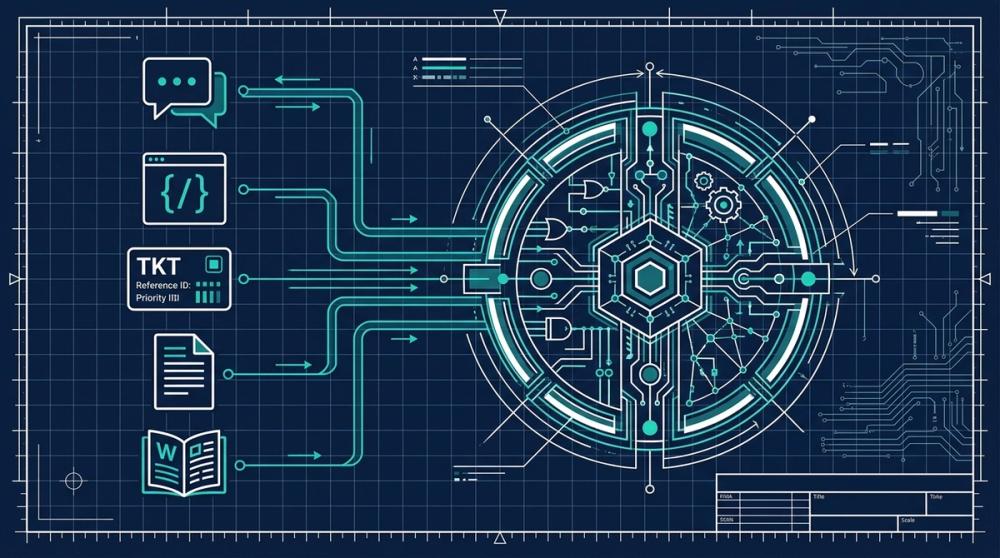
TL;DR: A context layer connects your scattered engineering knowledge (Slack, Jira, Notion, GitHub, Confluence) into a single retrieval surface your AI agents can query. Build one in five steps: audit your knowledge sources, choose between build and buy, connect your first three systems, validate retrieval quality with probe queries, then iterate based on agent accuracy. Most teams reach functional retrieval within two weeks of starting. The hard part is not the technology. It is mapping where your institutional knowledge actually lives.
How much of your engineering team's institutional knowledge is accessible to your AI agents right now? If you're like most orgs I've talked to, the answer is "maybe two systems out of ten." Your agents can see the code. They might see the README. But the Slack threads explaining why a migration was abandoned, the Jira ticket documenting the schema constraint, the Confluence page with the deployment runbook - all invisible. Building a context layer closes that gap. It connects scattered knowledge into a single retrieval surface your agents can query on demand. If you've already read what a context layer is, this guide walks you through how to actually build one.
What does your engineering org actually need from a context layer?#
Anthropic's context engineering guidance identifies four categories of context an agent needs: system instructions, conversation history, retrieved knowledge, and working state (Anthropic Engineering, 2025). Most engineering teams supply the first two and leave retrieved knowledge to ad-hoc RAG or nothing at all. That's the gap you're filling.
The requirements are simple once you name them. First, heterogeneous source access. Your institutional knowledge lives across code repos, issue trackers, chat platforms, wikis, and design documents. The retrieval surface must read from all of them, not just the ones with convenient APIs. Second, on-demand retrieval. The agent should pull context at query time, not preload everything into a bloated prompt. Third, permission enforcement. An intern's agent shouldn't surface the same context as the principal engineer's.
What separates a real retrieval surface from a folder of markdown files? Conflict resolution. When a Confluence page says one thing and a Slack thread says another, the layer needs to adjudicate using recency and authority signals. For a deeper look at this architecture, see our breakdown of why retrieval alone isn't enough.
Step 1: How do you audit your knowledge sources?#
Packmind's context engineering best practices recommend starting with a minimum viable starter pack: your technology stack overview, three to five critical conventions, build commands, and one non-obvious architectural decision (Packmind, 2026). That's the floor. You can't build this retrieval surface without first mapping what it needs to connect to.
Here's the audit process I've walked teams through. Open a spreadsheet. List every system where engineering knowledge lives. For each system, estimate what percentage of your institutional knowledge it holds. A typical breakdown looks something like this: Slack holds roughly 30% of engineering knowledge, code repos 25%, issue trackers like Jira or Linear 15%, wikis like Confluence or Notion 15%, formal documentation 10%, and unwritten tribal knowledge the remaining 5%.
The "tribal knowledge" slice is the one teams underestimate. That 5% often contains the decisions that cause the most agent failures, because it lives in nobody's head consistently. The audit surfaces it.
Run this exercise with three senior engineers in a room. It takes about ninety minutes. When you're done, you'll have a prioritized list of sources and a rough sense of which ones carry the most decision-relevant context. Don't skip this step. Every team I've seen jump straight to retrieval architecture regrets it within a month.
Step 2: Should you build or buy your context layer?#
Gartner's Data and Analytics Summit 2026 positioned context as critical infrastructure, recommending that most organizations buy rather than build (Atlan, Gartner D&A Summit, 2026). There's a reason for that recommendation. The build path is longer than it looks.
Building from scratch means connecting to each source's API individually. Slack's API, GitHub's GraphQL endpoint, Jira's REST API, Confluence's v2 API. Then you need to normalize the data formats, implement retrieval and ranking, handle incremental syncing, and enforce permissions per query. Nearly every team I've worked with underestimates the permissions requirement specifically. It's not just "can this user see this repo." It's "can this user see this private Slack channel, this restricted Confluence space, this internal-only Jira project."
Here's the decision matrix I use:
- Team size under 50 engineers, fewer than 5 sources, no compliance requirements: Build is feasible if you have a dedicated platform engineer and 8-12 weeks.
- Team size 50-500 engineers, 5-10 sources, SOC 2 or similar: Buy. The compliance surface alone will consume your quarter.
- Team size 500+ engineers: Buy and customize. No team at this scale should be writing Slack API pagination logic.
The buy decision isn't about capability. It's about time-to-value and maintenance burden. You want your engineers building product, not maintaining data connectors.
Step 3: Which systems should you connect first?#
DORA's 2025 State of DevOps report found that code review time increased 91% year-over-year as AI-generated PRs grew larger and more frequent (Faros AI, DORA Report, 2025). That statistic tells you where to start. Connect the systems that reduce review friction first.
Start with three sources. Not five. Not "all of them." Three. For most engineering teams, the highest-value combination is:
- Code repository (GitHub or GitLab). This is your ground truth. Every agent task starts here.
- Issue tracker (Jira or Linear). This contains the "why" behind code changes, acceptance criteria, and linked requirements.
- Team communication (Slack). This is where the real decisions happen, in threads that never make it into documentation.
These three cover roughly 70% of the context agents need for code-level tasks. The remaining 30% (Confluence, Notion, internal docs, design tools) matters, but it's second-wave. Connect the high-value, low-integration-cost sources first, then expand based on where agents still fail.
The same DORA report found that PR size increased 51.3% year-over-year (Faros AI, DORA Report, 2025). Larger PRs mean reviewers need more context to evaluate changes, exactly what a unified retrieval surface solves.
Frequently asked questions#
How long does implementation take?#
Most teams reach functional retrieval across their first three sources within two weeks. That gets you a working system your agents can query. Full coverage, meaning every relevant source connected with permission enforcement and conflict resolution, typically takes four to six weeks. The timeline depends on how many sources you're connecting and whether you're building or buying. We've seen teams ship a production setup in five business days when they chose a pre-built solution and had their source list ready from the audit.
Do we need to migrate our data?#
No. The layer reads from your existing systems through their APIs. It doesn't require data migration, duplication, or changes to your current workflows. Your engineers keep using Slack, Jira, Confluence, and GitHub exactly as they do today. It indexes and retrieves from those systems in place.
What happens when sources conflict?#
Source conflicts are common. A Confluence page might describe an architecture that's three sprints out of date, while a recent Slack thread captures the current state. A mature implementation resolves these conflicts using recency signals (when was the source last updated) and authority signals (is this an approved design doc or an off-the-cuff message). For a deeper look at conflict resolution architecture, see our guides on what a context engine is and what a context layer is.
Step 4: How do you validate context retrieval quality?#
Anthropic's effective harness patterns for long-running agents recommend testing with questions whose answers you already know, then measuring retrieval accuracy across source types (Anthropic Engineering, 2025). This probe-based evaluation is the most reliable way to validate retrieval quality before your agents depend on it.
Here's the validation process. Write ten probe questions that span your connected sources. Make sure you already know the correct answers. Examples:
- "Which team owns the payments service?" (answer lives in Jira/Confluence)
- "Why did we switch from PostgreSQL to DynamoDB for session storage?" (answer lives in a Slack thread and an ADR)
- "What's the retry policy for the notification queue?" (answer lives in code comments and a Confluence page)
Run each probe against your setup. Score the responses on a three-point scale: correct, partially correct, or wrong. Your target is 90% accuracy on the first pass. Austin Rojan at Subsplash reported hitting 90% accuracy on complex data structure questions after connecting their sources (Austin Rojan, Onboarding Specialist, Subsplash, 2026). That's the benchmark you're aiming for.
If you're below 70% accuracy, the problem is usually source coverage, not retrieval quality. Go back to your audit and check what's missing. If you're between 70% and 90%, the issue is more likely ranking or conflict resolution. You can use our evaluation checklist to diagnose the specific gap.
Step 5: How do you iterate and expand coverage?#
After validating the initial three-source setup, expansion follows the same pattern: track which questions agents fail on, identify the missing source, and connect it. The iteration cycle typically surfaces two to three additional sources in the first month. It's rarely a surprise. The sources you need next are usually the ones your senior engineers mention most during the audit.
Monitor three signals as you expand:
- Agent accuracy rate: What percentage of agent outputs pass review without context-related corrections?
- Source gap frequency: When an agent fails, which missing source would have prevented the failure?
- Query coverage: What percentage of agent queries return results from at least two sources?
In my experience, connecting Confluence or Notion as the fourth source closes the largest remaining gap. Internal documentation, even when it's outdated, provides the architectural rationale that code and tickets alone can't supply.
Don't try to connect everything at once. Each new source should be validated with probe queries before your agents start relying on it. One well-connected source per week is a sustainable pace.
What does a context layer look like in production?#
Engineering teams running this architecture in production report saving between 60 and 70 hours per week on Q&A, time that previously went to answering questions or searching for answers across disconnected systems (Ekan Subramanian, VP of Engineering, Fingerprint, 2026). That's not a theoretical projection. It's what Fingerprint's VP of Engineering measured after connecting their knowledge sources through Unblocked.
In production, the layer operates as a unified retrieval surface across PRs, Slack threads, Jira tickets, Notion pages, Confluence spaces, S3 buckets, and code repositories. When an agent or an engineer asks a question, the layer pulls from every connected source, resolves conflicts between them, enforces permissions, and returns a synthesized answer.
Pedro Fernandez, Engineering Manager at RB Global, described it this way: "Coming in fresh, we were able to understand how the platform worked by asking Unblocked. It helped us support over 200 developers much faster than we otherwise could have."
That "coming in fresh" detail matters. Unified retrieval also compresses onboarding. New engineers and new agents alike start with the full picture instead of spending weeks piecing together institutional knowledge from scattered systems.
The production version also surfaces what you didn't know to look for. Gustavo Alvarez at Sixfold described using it to search across Slack, fourteen Notion docs, and S3 to understand where data lived and where the gaps were. "There is no other way to humanly accomplish this task," he said.
Your First Week#
You don't need a quarter-long initiative to build this retrieval surface. You need five focused days. Here's the plan.
Monday: Run the knowledge source audit. Gather three senior engineers. List every system where institutional knowledge lives. Estimate the knowledge distribution. Ninety minutes, one spreadsheet, done.
Tuesday: Make the build-versus-buy decision. If you're buying, start a trial. If you're building, scope the first three source connectors.
Wednesday: Connect your first three sources. Code repository, issue tracker, and team communication. Most pre-built solutions complete this in hours, not days.
Thursday: Write ten probe queries and run them against your setup. Score accuracy. Identify gaps.
Friday: Review results. If you're above 70% accuracy, plan your fourth source. If you're below, revisit source coverage and re-run probes.
By Friday afternoon, you'll have a functional retrieval surface your agents can query. It won't be complete. It won't cover every source. But it will already be more context than your agents had on Monday, and that difference shows up immediately in output quality. For a structured evaluation framework, use our evaluation checklist to benchmark where you stand.