Unblocked vs Glean vs Augment: Which Is Right for Your Engineering Team?
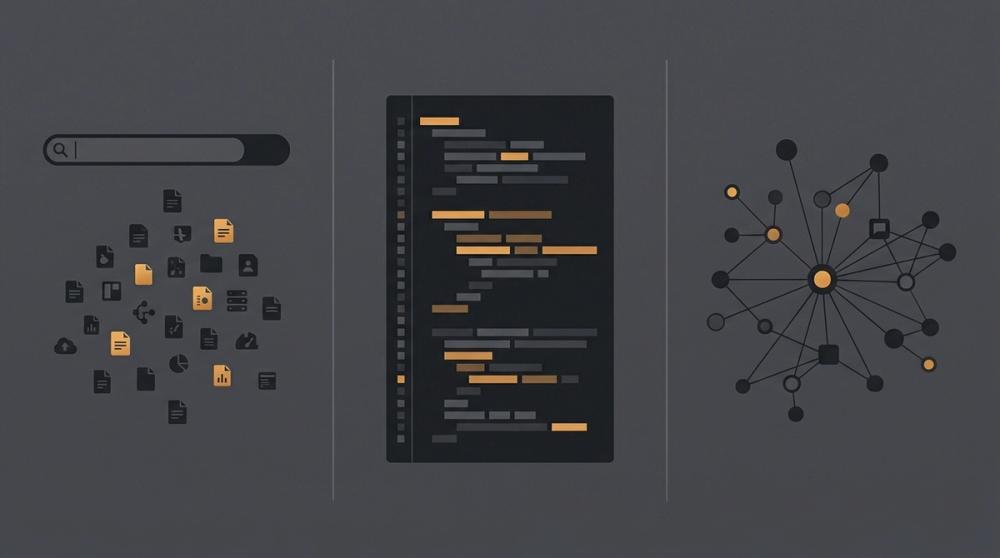
Glean, Augment, and Unblocked are often grouped together as “AI for engineering,” but they solve different problems. Glean is enterprise search, Augment is an IDE-native coding assistant, and Unblocked is engineering context infrastructure for humans and AI agents.

Key Takeaways
• Glean is an enterprise-wide knowledge search product that spans HR, finance, sales, and engineering. Augment is an IDE-native AI coding assistant. Unblocked is engineering context infrastructure for AI agents and workflows.
• Pick Glean when the use case is company-wide knowledge search, not engineering-specific reasoning.
• Pick Augment when the IDE is the center of gravity and engineers want AI pair-programming with strong codebase awareness.
• Pick Unblocked when engineering context is scattered across Slack, Jira, GitHub, and docs, and agents need to reason across all of it.
• These aren't always either/or. Large engineering organizations frequently run multiple AI coding products side by side, because the use cases don't fully overlap.
Open any engineering leader's buyer-research spreadsheet in 2026 and you'll find the same three names sitting side by side in a single column labeled "AI tooling": Glean, Augment, Unblocked. They get rolled up together because each one shows up in the same procurement conversations, each one promises to make engineers faster, and each one has appeared in the same Gartner enterprise-AI coverage. Per Gartner's 2025 forecast, more than 75% of enterprise software engineers will be using AI coding assistants by 2028, up from less than 10% in early 2023 (Gartner, 2025). That growth pulled a lot of adjacent products into the same RFP shortlists.
The three names get lumped because the buyer hears "AI for engineering" and stops reading. The three products solve different problems. This piece unpacks the real differentiation so a buyer comparing them can stop guessing and start scoping.
What does each product actually do?#
The most common complaint engineering buyers raise in vendor evaluations isn't tool quality. It's category confusion: overlapping product surfaces, non-overlapping vocabulary, and three vendors describing themselves with the same five buzzwords. The three products in this comparison sit in three different product categories. The labels matter.
Glean is enterprise knowledge search. One query bar that reads across Slack, Google Drive, Confluence, Salesforce, Jira, GitHub, and 50+ other connectors. Its core promise is that an employee anywhere in the company can ask a natural-language question and get an answer drawn from systems the company already owns. Engineering is one of many departments served, not the design center. Glean Assistant extends the search bar with agentic workflows that span those same connectors.
Augment is an IDE-native AI coding assistant. The primary surface is a VS Code or JetBrains extension that provides autocomplete, inline chat, and agent actions inside the editor. Its design center is the individual engineer working in code, with the codebase indexed for awareness. Augment's public materials describe it as a coding assistant first, not as a horizontal knowledge tool.
Unblocked is engineering context infrastructure. It reads across the systems engineering knowledge actually lives in, code, PRs, Slack, Jira, design docs, and incident threads, then surfaces decision-grade context to IDEs, agents, and developer workflows through native integrations, an MCP server, a CLI, and APIs. The design center is the engineering organization, and the unit of value is whether an AI agent or engineer can answer a "why" question, not just a "what" question. For the architectural framing, see what a context engine is.
Who is each product built for?#
The persona spread is where the lumping fails fastest. The JetBrains 2025 State of Developer Ecosystem reported broad daily use of AI coding assistants across professional developers, but the buyer for that tool is rarely the engineer using it (JetBrains, 2025). Each of these three products targets a different buyer and a different daily user.
Glean's primary buyer is typically the IT or Operations leader. Its daily user is everyone in the company who needs to find something across SaaS systems. Engineers in Glean-heavy organizations use it when the answer they need lives outside code, an HR policy, a finance form, a vendor contract, or a sales account note.
Augment's primary buyer is the engineering leader, often a VP of Engineering or a head of developer experience. Its daily user is the individual engineer in the IDE. The success metric Augment optimizes for is the same one any IDE-native coding tool is judged by: time to accepted suggestion, share of PRs touched, code-completion latency.
Unblocked's primary buyer is the engineering or platform leader who owns AI strategy across the org. Its daily users span humans and agents: engineers asking why a service exists, AI coding agents fetching cross-source context before writing code, and async workflows like onboarding or incident triage. The success metric is decision-grade context. See the framework for what that means in practice.
The personas don't fully overlap because the jobs to be done don't fully overlap. The Stack Overflow 2025 Developer Survey reported widespread AI-tool use among professional developers, with a much smaller share describing their primary AI tool as fully integrated with their team's knowledge sources (Stack Overflow, 2025). The gap between "I use AI" and "AI knows what my team knows" is precisely the gap each product addresses from a different direction.
How do these three compare across capabilities?#
The average enterprise engineering organization now connects to six or more distinct categories of knowledge tools: code, chat, ticketing, docs, design, observability. That sprawl is the underlying reason these three products feel similar to a buyer. The differentiation is in which subset of that sprawl each product touches and what it does with the data.
The heatmap below is the cleanest way to see it. Read each row as a dimension a buyer should weigh, then read each cell as that product's relative strength. "Deep" means the product is built around that capability. "Broad" means the product covers it widely but not deeply. "Limited" means the product is not designed for that capability and any coverage is incidental.
Table 1. Capability heatmap across eight dimensions.
| Dimension | Glean | Augment | Unblocked |
|---|---|---|---|
| Primary interface | Search bar, Glean Assistant | IDE extension (VS Code, JetBrains) | IDE, MCP, CLI, agent APIs |
| Target audience | Entire enterprise | Individual engineers | Engineering organizations |
| Code awareness | Limited, repos indexed as one source | Deep, codebase-native | Deep, code + organizational context |
| Source breadth | Broad, 50+ enterprise connectors | Limited, code-first | Engineering-focused, code + Slack + Jira + docs + PRs |
| Agent integration | Glean Assistant API | Augment agent actions | MCP, CLI, native integrations |
| Reasoning focus | Knowledge retrieval | Code generation, completion | Cross-source reasoning for agents |
| Deployment | SaaS, VPC, on-prem | SaaS, VPC | SaaS, VPC |
| Typical buyer | IT, Ops leader | Engineering leader | Engineering, Platform leader |
Read the table left-to-right and the picture is clear. Glean is widest at the top (interface, audience, source breadth) and narrowest at the bottom (code awareness, reasoning depth). Augment is the inverse: narrow at the top, deep at the bottom on coding tasks. Unblocked sits where Augment's depth meets Glean's breadth, but only for the engineering slice of the org.
None of these is a knock. Glean would be a worse product if it tried to compete with Augment on inline code completion. Augment would be a worse product if it tried to compete with Glean on connectors to Workday and Salesforce. The three products are good at different things on purpose.
When should you pick Glean?#
Glean wins when the use case is enterprise-wide knowledge search, not engineering-specific context. The ROI shows up most clearly when the cross-departmental search problem is the binding constraint and a single search bar across SaaS systems is the right shape for the work.
Pick Glean when the question your employees ask most often is "find me the Q3 OKRs" or "what's our refund policy" or "where's the contract with vendor X." Those questions cross HR, finance, legal, sales, and engineering. A horizontal search product is the right shape for that work.
Glean is also the right pick when engineering is a minority workload and the organization wants one knowledge tool, not a stack. Engineering teams inside Glean-centric organizations frequently use Glean for general search and pair it with a specialized engineering tool when the AI-for-coding use case becomes its own line item.
The honest limitation is depth. Glean is not designed to reason about why a specific function exists, which Slack debate killed a previous refactor attempt, or which Jira ticket explains a schema decision made four quarters ago. It can find documents that mention those topics. It isn't engineered to synthesize across them into a decision-grade answer. That depth is engineering-specific and lives in a different product category.
When should you pick Augment?#
Augment wins when the IDE is the engineer's primary work surface and the priority is AI coding assistance with strong codebase awareness. The integration depth, not the model behind it, is where the productivity gain lives: chat-only AI tools sit outside the work surface, while IDE-integrated tools modify code in the editor where engineers already spend the day.
Pick Augment when your engineers want inline completion that understands the repo, when chat inside the IDE is the way they want to ask coding questions, and when most of the work that needs AI assistance lives inside the editor. Augment's public materials position the product around codebase context and agentic actions inside the IDE, and that's the surface where it's strongest.
Augment is also the right pick when the engineering organization's bottleneck is per-engineer coding productivity rather than cross-team context. If the question "how do I write this function" is more frequent than "why does this function exist," the IDE-native tool is in the right place.
The honest limitation is scope. Augment's design center is the code and the IDE. Context that lives in Slack threads, Jira discussions, design docs, and incident retrospectives is harder to surface from an editor-bound tool. That gap is exactly what context infrastructure products are designed to fill, which is the next product category.
When should you pick Unblocked?#
Unblocked wins when the constraint is engineering context sprawl, knowledge in Slack, decisions in Jira, patterns in code, reviews in GitHub, postmortems in Confluence, and the team needs AI agents and engineers to reason across all of it. Per Anthropic's 2025 effective context engineering guidance, agents fail most often not because the model is weak but because the right context never reached the model (Anthropic, 2025). Closing that gap is the product's design center.
Pick Unblocked when the gap between "agent has access to a tool" and "agent has understanding of the engineering org" is the problem you're trying to solve. The product is positioned as context infrastructure, meaning the value is in what reaches the model on a given turn, not in any single surface. Engineers get answers in their IDE, agents get context through MCP and CLI, async workflows get context through APIs. The same underlying engine feeds all of them.
Pick Unblocked when the engineering organization is large enough that institutional knowledge lives in heterogeneous sources by design. The design rationale is in a doc, the constraint is in a Slack thread from six months ago, the regression history is in PR comments, and the active incident is in a different channel. A code-native tool surfaces the code. A horizontal search tool surfaces the documents. Unblocked is built to synthesize across them.
The honest scope: Unblocked is engineering-specific. It is not the right pick for an HR knowledge-search use case or a sales-enablement search use case the way Glean is. And it isn't a replacement for an IDE-native autocomplete experience the way Augment is. For more on why context infrastructure is its own category, see the context layer pillar.
Can you use more than one of these?#
Yes, and many large organizations do. Large engineering organizations frequently run two or more AI coding products simultaneously, and stacking is common at the 500-plus-engineer scale. The overlap between product categories is small enough that stacking them often produces less duplication than buyers expect.
The most common combinations are predictable from the category framing. Glean as the company-wide knowledge layer plus Augment inside the engineering IDE is a clean split, the two products almost never compete for the same surface or the same buyer. Glean plus Unblocked is a similarly clean split when engineering wants depth on its own sources and the rest of the company wants breadth across enterprise SaaS.
Augment plus Unblocked is the more nuanced pairing because both products target engineering. The split that makes sense in practice: Augment owns the IDE-native completion and inline chat surface, while Unblocked owns the cross-source context that feeds agents, async workflows, and the engineer's "why" questions. The two are not redundant when the IDE is one surface among several. They become redundant only if a team treats the IDE as the entire AI footprint, in which case the buyer is solving a smaller problem than the three-product comparison implies.
The decision logic comes down to where the bottleneck is. If individual engineer productivity inside the editor is the binding constraint, an IDE-native product is the priority. If team-level context and agent-driven workflows are the binding constraint, a context infrastructure product is the priority. Most mature engineering organizations end up with both, plus a horizontal search product for the non-engineering use cases.
What does pricing actually look like?#
All three products sell into the enterprise, and all three have limited public pricing. Vendor pricing opacity is consistently cited as a friction point in AI-tooling evaluation. The shape of each product's pricing is roughly visible from public materials. The real cost is shaped by deployment model, source-connection work, and existing vendor footprint.
Glean publishes per-seat enterprise pricing tiers and typically sells at the company-wide level, meaning the unit cost is multiplied across every employee, not just engineering. That makes Glean's total contract value sensitive to headcount in non-engineering departments. The published per-seat figure is the floor, not the ceiling, once VPC or on-prem deployment, custom connectors, and enterprise SLAs are scoped in.
Augment publishes per-engineer-seat pricing, sold into engineering organizations rather than company-wide. The contract value scales with engineering headcount specifically. The variable cost driver is typically the scope of codebase indexing and the depth of agent action configuration.
Unblocked sells per-engineer with enterprise agreements. The contract value scales with engineering headcount in the same shape as Augment, but the cost drivers differ: source-connector configuration, deployment model, and the breadth of agent-and-workflow integration are typically the variables that move pricing within a given headcount range.
The buyer-side framing that holds across all three: budget the integration work, not just the license. Source-connection, deployment, and rollout typically take a quarter or more for full-stack AI tooling at enterprise scale. License cost is rarely the largest line item once the project is shipping.
What should you ask each vendor in a demo?#
Five questions cut through marketing in any AI-for-engineering demo. They surface whether the product is doing the thing it claims to do, on your data, with your permissions, in your time-to-value window. The questions are the same for all three vendors. The answers will differ.
Show me the same engineering task with and without the product. Run a real task, fixing a bug, writing a new endpoint, onboarding to a service, both with the tool and without. Time it. Look at the quality of the result. Demos that don't show the unmodified baseline are demos hiding the delta.
What sources does the product actually reason across, and at what depth? "Indexes 50 sources" and "reasons across 50 sources" are different claims. The first is a connector count. The second is a synthesis capability. Ask for a worked example where the answer requires combining two or three sources.
How does permission enforcement work, per query or per ingestion? Per-ingestion permissioning collapses every user into a single least-restrictive role and is a compliance liability waiting to happen. Per-query enforcement against source ACLs is the safe shape. Ask the vendor to walk through which one they implement.
How does the product handle conflicts between sources? When the Slack thread says X, the design doc says Y, and the code says Z, which answer surfaces? A vendor that says "the most recent one" or "the highest-ranked one" is doing retrieval, not synthesis. A vendor that surfaces the conflict explicitly is doing the harder work.
What's the time-to-value, in hours, days, or weeks? Ask for a real customer's time from contract signing to first successful production use. If the answer is in quarters, the integration work is the actual product cost.
How should an engineering leader actually decide?#
The decision tree is short. The highest-performing engineering organizations in 2026 evaluate AI tooling against a single criterion: does this product solve a binding constraint we can name, or does it expand the surface area of constraints we already have? The right product is the one that closes the binding constraint, not the one with the longest feature list.
If the binding constraint is company-wide knowledge search, Glean is the right shape. The horizontal breadth that makes Glean look thin on engineering depth is exactly the breadth that makes it the right product for an HR-finance-legal-sales-engineering search problem.
If the binding constraint is per-engineer coding productivity in the IDE, Augment is the right shape. The IDE-native focus that makes Augment look narrow on cross-team context is exactly the focus that makes it the right product for engineers who want inline AI assistance bounded by the repo.
If the binding constraint is engineering context sprawl and agent-driven workflows, Unblocked is the right shape. The engineering-specific scope that makes Unblocked look narrower than a horizontal tool is exactly the scope that lets it reason deeply across the systems engineering knowledge actually lives in.
The buyer's job is to name the binding constraint first, then pick the product. The most common mistake is reversing the order: picking the product because it's the most-discussed in the press cycle, then retrofitting a constraint to justify the buy. The three products in this comparison are good at different things on purpose. Pick the one that matches the problem you can name.
Frequently asked questions#
Is Glean a coding tool?
No. Glean is enterprise knowledge search. It indexes code repositories as one source among its 50+ enterprise connectors, but the product is not designed as a coding assistant or a code-reasoning engine. Engineering teams in Glean-centric organizations use it for cross-departmental search and typically layer a specialized engineering tool on top.
Is Augment a Glean competitor?
Only tangentially. They appear in a few of the same buyer conversations because both products contain the word "AI" in their positioning, but they solve different problems. Augment is an IDE-native coding assistant for individual engineers. Glean is horizontal knowledge search for the whole company. The buyer, the user, and the success metric are different.
What's the difference between Augment and Unblocked?
Augment lives in the IDE and is optimized for individual-engineer coding productivity. Unblocked is context infrastructure for engineering, designed to serve AI agents, IDEs, and async workflows across the organization. Both have deep code awareness. They diverge on scope: Augment is repo-centric, Unblocked is engineering-org-centric and reasons across code plus Slack, Jira, docs, and PRs.
Which has the widest source coverage?
Glean, by a wide margin. The product publishes 50+ enterprise connectors spanning HR, finance, legal, sales, engineering, and operations. Augment and Unblocked have narrower source coverage by design. Both are engineering-focused. Source breadth is the right metric for a horizontal search tool. Engineering depth is the right metric for an engineering-specific tool.
Can I replace Glean with Unblocked for engineering?
For engineering-specific context, yes. Unblocked reasons deeper across engineering sources like code, PRs, Slack, Jira, and design docs. For non-engineering search like HR, finance, legal, and sales, Glean stays. The two products serve different departments. A common pattern in large organizations is Glean company-wide and Unblocked inside engineering.
The takeaway for buyers#
Three products. Three categories. One column in a buyer's spreadsheet. The lumping happens because the procurement conversation moves faster than the category-definition work, and "AI for engineering" feels like a single line item until the demos start.
The clean framing for an engineering leader in 2026 is this. Glean is enterprise knowledge search. Augment is IDE-native coding assistance. Unblocked is engineering context infrastructure. None of the three competes head-on with the other two on the dimension each is best at. The fact that large engineering organizations frequently run two or more of these products is the buyer-side evidence that the category overlap is smaller than it looks.
For buyers casting a wider net than these three, we've reviewed eight Glean alternatives with pricing and fit notes.
Name the binding constraint your engineering organization is actually trying to fix. Map the product to the constraint, not the constraint to the product. And budget the integration work, not just the license. The three products in this comparison are all good at the jobs they're designed for. The buyer's job is picking the right one for the job that's actually open. For the deeper architectural framing behind why context is the binding constraint in most cases, the MCP token autopsy and the context layer pillar are the next reads.